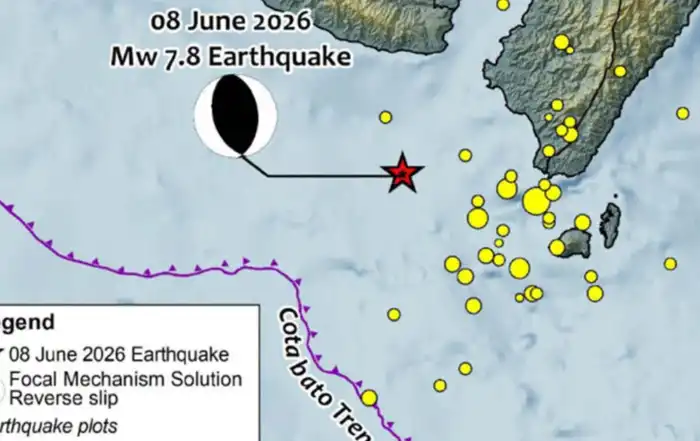
On June 8, 2026, a major earthquake with a moment magnitude (Mw) of 7.8 occurred offshore of Sarangani, Philippines. As detailed in the official primer released by the Philippine Institute of Volcanology and Seismology (PHIVOLCS), this significant tectonic event highlights the highly active seismic nature of the region and generates vital data for the global engineering and scientific community.
For seismologists, academic researchers, and structural engineers, events of this magnitude provide critical empirical data that drive the evolution of seismic design, structural assessment, and retrofitting methodologies. At Seismosoft, our focus remains on providing the analytical tools necessary to translate raw seismic records into actionable engineering insights.
Processing Strong Ground Motion Data
The foundational step in post-earthquake structural analysis involves the rigorous processing of strong-motion records captured by official local seismic networks. Researchers and academics utilize software such as SeismoSignal and SeismoSpect to process raw accelerograms derived from events like the Sarangani earthquake. Procedures including baseline correction, digital filtering, and the derivation of elastic and inelastic response spectra are essential to accurately quantify the frequency content, peak ground parameters, and overall intensity of the ground shaking.
Record Matching for Time-History Analysis
For structural engineers tasked with evaluating infrastructure resilience in the Philippines and similar tectonic settings, utilizing real earthquake records is an invaluable practice. Software such as SeismoMatch allows professionals to adjust the time-histories recorded during the Sarangani event to match target design response spectra dictated by the National Structural Code of the Philippines (NSCP) or other international standards. These matched records can subsequently be employed in rigorous non-linear dynamic time-history analyses, providing a highly realistic simulation of how specific structures respond to regional seismic loading.
Structural Assessment and Targeted Retrofitting
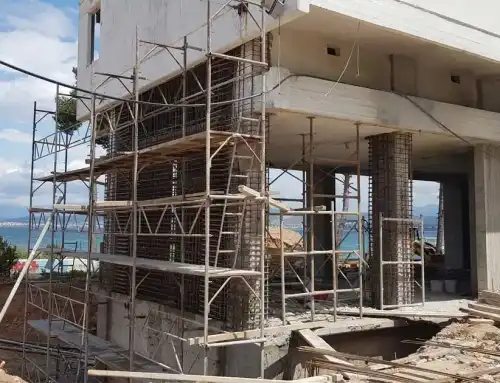
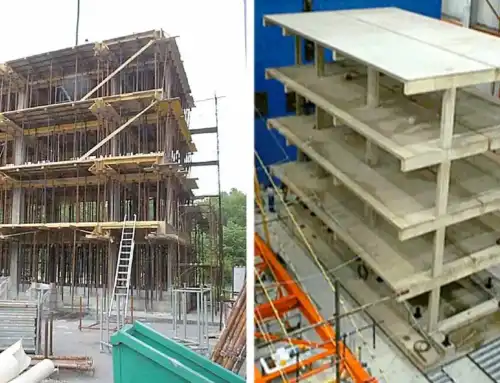
A primary concern following a high-magnitude offshore event is assessing the structural integrity of the existing building stock, particularly in coastal and adjacent mainland areas subjected to long-duration shaking. Evaluating potential vulnerabilities and designing appropriate retrofitting strategies requires advanced non-linear analytical capabilities.
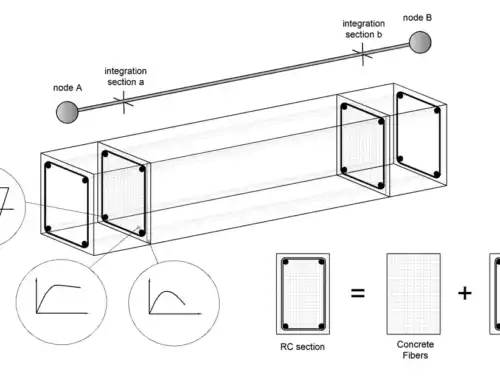
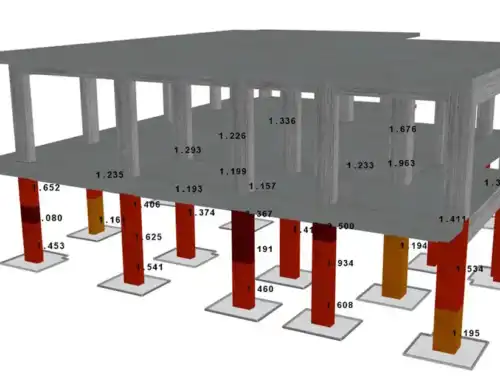
Tools like SeismoBuild and SeismoStruct enable engineers to model complex reinforced concrete structures, perform static pushover or dynamic analyses, and accurately predict the formation of plastic hinges, interstorey drifts, and potential failure mechanisms. This level of analytical depth is crucial for professionals developing targeted strengthening schemes, such as FRP wrapping or concrete jacketing, ensuring that existing structures are upgraded to withstand future seismic demands.
Advancing Global Seismic Resilience
The Mw 7.8 Offshore Sarangani earthquake serves as a critical case study for both the academic and professional engineering communities. By bridging the gap between raw seismological data and practical structural response, the industry can continuously refine its approach to seismic risk mitigation.
As the situation develops, we are closely monitoring the release of official seismological records. If detailed strong ground motion data from this event becomes publicly available through official seismic networks, the Seismosoft team will process these records through our software suite and publish further technical insights and data for the engineering community.